Thought Provokers

Civil Resistance and Power Politics
Over the last decade there have been quite a number of books published on non-violence action (under a wide range of terminologies: people power, poor people’s movements, civil resistance, collective action, etc). A good number of these works start out with the premise that non-violence is the best / only way for political change to […]
Tags: #Civil resistance #collective action #non-violent action #people power #Power Politics

Indigenous Pathways of Action and Freedom
Taiaiake Alfred’s “Wasase: Indigenous Pathways of Action and Freedom” (2009) was recommended to me, as I sought out a book (or parts of a book) that might be used to introduce undergraduate students to ethical and justice issues of colonialism in Canada. In some ways, it is similar to Ngugi’s work on decolonizing the mind, […]
Tags: #Colonization #decolonization #Indigenous #Reconciliation #Taiaiake

The Violence of the Green Revolution
Vandana Shiva has long been one of the key actors and advocates promoting locally-driven and owned, agroecologically-oriented and opposing corporate control of the agricultural and food sector. Although it was not her first publication, this message gained a global audience with “The Violence of the Green Revolution: Third World Agriculture, Ecology, and Politics” (1989). With […]
Tags: #Agroecology #Corporations #Green Revolution #Inequality #Vandana Shiva

Why Some Social Movements Succeed While Others Don’t
This is the question that drives the recent book by Leslie Crutchfield, “How Change Happens: Why Some Social Movements Succeed While Others Don’t” (2018). This book is about social movements in the US, or that are primarily US-led. It offers some interesting case studies, quite descriptive throughout. The author summarizes the objective as seeking to understand […]
Tags: #Celebrate success #How change happens #Leadership #Management #Social movements

Land Tenure in Eritrea (1966)
An earlier post highlighted the first land tenure survey in Ethiopia, this post presents “Land Tenure in Eritrea (Ethiopia)” (1966) by Ambaye Zekarias. This publication is part of a broader set of literature that emerged during the 1960s (see broader literature here, with historical studies being a particular strength). The forward of this particular book […]
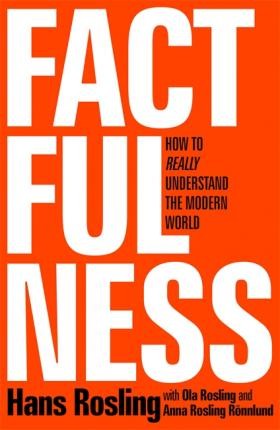
Factfulness – Hans Rosling
Hans Rosling passed away in 2017, but his “Factfulness: Ten Reasons We’re Wrong About the World – and Why Things are Better than You Think” (2018) carries his legacy on. For those familiar with Hans and his work, this is a good summary of a career working to educate. For those unfamiliar with Hans, this […]

Fictions of Feminist Ethnography
Some of the strengths of feminist scholarship and feminist critique have become more widely utilized and adopted, often without recognition of their origins. Intersectionality and positionality are two examples of approaches of this sort. In many ways, Kamala Visweswaran’s book “Fictions of Feminist Ethnography” (1994) is a reflection of the time period of its authoring […]
Tags: #Anthropology #Ethnography #Feminist #Intersectionality #Positionality

Somalia – The Problem Child?
In September of 1977 Mesfin Wolde Mariam published “Somalia: The Problem Child of Africa”, near the outset of the Ogaden War (which lasted from July 1977 to March 1978). As much as I respect Mesfin Wolde Mariam, this is a problematic book. Essentially, Mesfin challenges the claims that Somalis make with regard to their right […]
Tags: #Ethiopia #Mesfin Wolde Mariam #Ogaden #Problem child of Africa #Somalia

The History of Ethiopian – Indian Relations
This may not be the most rigorous of historical books, but given it was published in 1961, in Ethiopia, “Indo-Ethiopian Relations for Centuries” by Muthanna is a unique find. The first 70-odd pages present some rather tenuous linkages between the two areas, and ome rather bizarre claims that Ethiopians (and Egyptians) are descendants of Indians […]

Invisible Countries
The “map of the world as we all know today is the product of a series of accidents and historical processes that could just as easily have gone another way” (p. 5). Joshua Keating explores why the countries on the map seem so stable by visiting countries that don’t exist, in one shape or another. […]
About me

Logan Cochrane
Logan is a Professor at HBKU in the College of Public Policy. He is an Associate Fellow of the Ethiopian Academy of Sciences and an Adjunct Professor at Hawassa University (Institute for Policy and Development Research). Over the last twenty years, he has worked in Afghanistan, Benin, Burundi, Canada, the Democratic Republic of the Congo, Egypt, Ethiopia, Qatar, Saudi Arabia, South Africa, South Sudan, Tanzania and Uganda. Logan acts as a consultant for governmental agencies and non-governmental organizations, seeking to create bridges between research and practice.
Featured Posts
Tags
Africa Agriculture Anthropology Books Capitalism China Civil society Climate change Colonialism Colonization Conflict Culture decolonization Democracy Development Development Studies Economics Education Ethics Ethiopia Ethnography Fellowship Food Security Gender Globalization Governance History Human Rights Inequality Interdisciplinary International development Islam Leadership Middle East Migration Participation Philosophy Policy Politics Post-doc Poverty Power Qatar Racism Resilience Revolution Rural Development Sociology South Africa SustainabilitySubscribe to receive new blog posts via email