Thought Provokers

America, the Taliban, and the War through Afghan Eyes
Anand Gopal was a Pulitzer finalist and won the Ridenhour Prize for “No Good Men Among the Living: America, the Taliban, and the War through Afghan Eyes” (2014). For those interested in Afghanistan, I’ve covered books by Ahmed Rashid, William Dalrymple and Stephen Saideman elsewhere. Gopal’s book is an excellent read and presents the counter-narrative […]
Tags: #Afghanistan #Anand Gopal #No Good Men Among the Living #Taliban #War on Terror

Empire (Hardt & Negri)
“Empire” (2000) by Hardt and Negri lines many shelves and sits on many recommended reading lists on the Left. I have written up a summary of their 2004 book, for anyone interested – that book is also easier reading for those not interested or well versed in Marxist literature / terminology. Empire presents a detailed […]

The History of the Ethiopian Army
Richard Pankhurst made innumerable contributions to the history of Ethiopia. I found an original copy of “An Introduction fo the History of the Ethiopian Army”, published by the Imperial Ethiopian Air Force, 101st Training Centre, in 1967. The Forward (of only 2 pages) by Colonel Aberra Wolde Mariam provide interesting insight into the thinking of […]

Collective Choice and Social Welfare
Amartya Sen has made significant contributions to economics, development studies and philosophy. His early work actually focused on collective choice, which was the the topic of his 1970 book “Collective Choice and Social Welfare” (re-printed with significant additions in 2017). In the 2017 Introduction, Sen outlines what social choice theory is and the broad array […]
Tags: #Amartya Sen #Capabilities #Collective Choice and Social Welfare #Economics #Group choice

Civil Resistance and Power Politics
Over the last decade there have been quite a number of books published on non-violence action (under a wide range of terminologies: people power, poor people’s movements, civil resistance, collective action, etc). A good number of these works start out with the premise that non-violence is the best / only way for political change to […]
Tags: #Civil resistance #collective action #non-violent action #people power #Power Politics

Indigenous Pathways of Action and Freedom
Taiaiake Alfred’s “Wasase: Indigenous Pathways of Action and Freedom” (2009) was recommended to me, as I sought out a book (or parts of a book) that might be used to introduce undergraduate students to ethical and justice issues of colonialism in Canada. In some ways, it is similar to Ngugi’s work on decolonizing the mind, […]
Tags: #Colonization #decolonization #Indigenous #Reconciliation #Taiaiake

The Violence of the Green Revolution
Vandana Shiva has long been one of the key actors and advocates promoting locally-driven and owned, agroecologically-oriented and opposing corporate control of the agricultural and food sector. Although it was not her first publication, this message gained a global audience with “The Violence of the Green Revolution: Third World Agriculture, Ecology, and Politics” (1989). With […]
Tags: #Agroecology #Corporations #Green Revolution #Inequality #Vandana Shiva

Why Some Social Movements Succeed While Others Don’t
This is the question that drives the recent book by Leslie Crutchfield, “How Change Happens: Why Some Social Movements Succeed While Others Don’t” (2018). This book is about social movements in the US, or that are primarily US-led. It offers some interesting case studies, quite descriptive throughout. The author summarizes the objective as seeking to understand […]
Tags: #Celebrate success #How change happens #Leadership #Management #Social movements

Land Tenure in Eritrea (1966)
An earlier post highlighted the first land tenure survey in Ethiopia, this post presents “Land Tenure in Eritrea (Ethiopia)” (1966) by Ambaye Zekarias. This publication is part of a broader set of literature that emerged during the 1960s (see broader literature here, with historical studies being a particular strength). The forward of this particular book […]
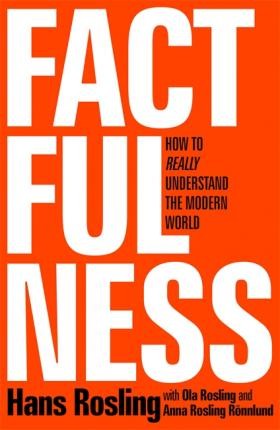
Factfulness – Hans Rosling
Hans Rosling passed away in 2017, but his “Factfulness: Ten Reasons We’re Wrong About the World – and Why Things are Better than You Think” (2018) carries his legacy on. For those familiar with Hans and his work, this is a good summary of a career working to educate. For those unfamiliar with Hans, this […]
About me

Logan Cochrane
Logan is a Professor at HBKU in the College of Public Policy. He is an Associate Fellow of the Ethiopian Academy of Sciences and an Adjunct Professor at Hawassa University (Institute for Policy and Development Research). Over the last twenty years, he has worked in Afghanistan, Benin, Burundi, Canada, the Democratic Republic of the Congo, Egypt, Ethiopia, Qatar, Saudi Arabia, South Africa, South Sudan, Tanzania and Uganda. Logan acts as a consultant for governmental agencies and non-governmental organizations, seeking to create bridges between research and practice.
Featured Posts
Tags
Africa Agriculture Anthropology Apartheid Books Capitalism Civil society Climate change Colonialism Colonization Conflict Culture decolonization Democracy Development Development Studies Economics Education Ethics Ethiopia Ethnography Fellowship Food Security Gender Globalization Governance History Human Rights Inequality Interdisciplinary International development Islam Land Leadership Middle East Migration Participation Philosophy Policy Politics Post-doc Poverty Power Qatar Racism Resilience Revolution Rural Development South Africa SustainabilitySubscribe to receive new blog posts via email