Thought Provokers

Capitalism in the Age of Globalization
Semir Amin was prolific, and I have covered a number of his books on this blog, including:
Tags: #Capitalism #Globalization #Intellectual Property #Samir Amin #Trade

Qatar and the Gulf Crisis
In 2017 the UAE, Saudi Arabia, Egypt and Bahrain launched a land, sea, and air blockade of the State of Qatar. Kristian Coates Ulrichsen (author of more than ten books on the region) documents the blockade in “Qatar and the Gulf Crisis” (2019). The author notes in the text that the writing of the book […]

Everyday Politics of the World Economy
One of the important efforts to shift the gaze in IPE studies beyond elites and regulation was a 2007 book edited by Hobson and Seabrooke called Everyday Politics of the World Economy. I was not seeking the book out per se, but reading other works by Hobson and stumbled on it. The book covers a […]
Tags: #Everyday politics #global political economy #Hobson #international political economy #World Economy

Social Dictatorships
What do some non-democratic governments have stronger social protection systems than others? That is the main questions attempted in the book “Social Dictatorships: The Political Economy of the Welfare State in the Middle East and North Africa” (2020) by Ferdinand Eibl (published by Oxford University Press). This book is largely an elaboration of a 2016 […]
Tags: #Authoritarian welfare states #Middle East #North Africa #Social Dictatorships #Welfare States

The Concept of Human Rights in Africa
“Human rights talk constitutes one of the main elements in the ideological armoury of imperialism. Yet from the point of view of the African people, human rights struggles constitute the stuff of their daily lives. For these two interconnected reasons, human rights talk needs to be subjected to a closer historical and political scrutiny.” (p. […]

The Future of Africa
Looking for an introduction to the issues facing Africa today and into the future? Jakkie Cilliers’ Open Access book “The Future of Africa: Challenges and Opportunities” (2021) is a good option, and is available for download here. The author is a leader in strategic studies focusing on Africa, founding an independent institute (Institute for Security […]
Tags: #Africa #Challenges #Opportunities #Strategic Studies #Textbook

Classifications of Knowledge
Looking to explore different epistemic and ontological vantage points? One option is Osman Bakar’s “Classification of Knowledge in Islam – A Study in Islamic Philosophies of Science” published by the Islamic Texts Society in 1998 (first published by the Institute for Policy Research in Kuala Lumpur, Malaysia, in 1992). The book examines classifications (different types; […]
Tags: #Classification of knowledge #Epistemology #Islam #Ontology #Philosophy
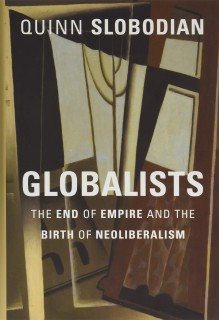
The End of Empire and the Birth of Neoliberalism
“Globalists: The End of Empire and the Birth of Neoliberalism” (2018) by Slobodian (Harvard Press) is a detailed history of the people and ideas neoliberalism, and the institutions they created. The book is historical and delved into the deep end. One reflection, which is somewhat counter intuitive, is that neoliberals are not opposed to government […]

The Ghost Map
“The Ghost Map: The Story of London’s Most Terrifying Epidemic – And How It Changed Science, Cities, and the Modern World” (2006) by Steven Johnson is the story of cholera in Victorian London and how germ theory emerged. The book is well written, conveyed through the key figures involved, and enjoyable. The author weaves in […]
Tags: #Cholera #Diet #Germ Theory #The Ghost Map #Urbanization

Philosophy and African Development
Earlier I posted about a CODESRIA book on methodology, in the same year (2011) CODESRIA also published the book “Philosophy and African Development: Theory and Practice”, edited by Lansana Keita. As with the other volume, there are amazing contributors and contributions. The text was largely published earlier, as a 2004 journal issue, however most remains […]
Tags: #African Development #CODESRIA #Lansana Keita #Philosophy #Theory and Practice
About me

Logan Cochrane
Logan is a Professor at HBKU in the College of Public Policy. He is an Associate Fellow of the Ethiopian Academy of Sciences and an Adjunct Professor at Hawassa University (Institute for Policy and Development Research). Over the last twenty years, he has worked in Afghanistan, Benin, Burundi, Canada, the Democratic Republic of the Congo, Egypt, Ethiopia, Qatar, Saudi Arabia, South Africa, South Sudan, Tanzania and Uganda. Logan acts as a consultant for governmental agencies and non-governmental organizations, seeking to create bridges between research and practice.
Featured Posts
Tags
Africa Agriculture Anthropology Books Capitalism China Civil society Climate change Colonialism Colonization Conflict Culture decolonization Democracy Development Development Studies Economics Education Ethics Ethiopia Ethnography Fellowship Food Security Gender Globalization Governance History Human Rights Inequality Interdisciplinary International development Islam Leadership Middle East Migration Participation Philosophy Policy Politics Post-doc Poverty Power Qatar Racism Resilience Revolution Rural Development Sociology South Africa SustainabilitySubscribe to receive new blog posts via email