Blog
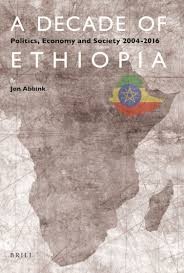
A Decade of Ethiopia: Politics, Economy and Society
As appears in Progress in Development Studies 18(2): 147-14. DOI: https://doi.org/10.1177/1464993417749150 Abbink, Jon. 2017: A Decade of Ethiopia: Politics, Economy and Society 2004-2016. Leiden: Brill. 253 pp. $24.00. ISBN: 9789004345881. Ethiopia is a country of contradictions. There have been sustained, high rates of macro-economic growth and progress on development indicators, with persistently high levels of poverty […]

The Black Man’s Burden
The role of institutions in development has becoming increasingly important, most notably in the recent works “Economic Origins of Dictatorship and Democracy” (2006) and “Why Nations Fail” (2012). Before these books, Basil Davidson wrote “The Black Man’s Burden: Africa and the Curse of the Nation-State” (1992), which places a large emphasis on the role of […]
Tags: #Basil Davidson #Black Man's Burden #Colonialism #decolonization #Institutions

The ‘Nelson Mandela’ You Have Probably Not Heard About
Robert Sobukwe (1924-1978). Leader of the Pan Africanist Congress (PAC) in South Africa, a focal leader in the struggle against apartheid, Sobukwe was so feared by the apartheid government that after he led a mass non-violence protests to break unjust laws, he was jailed indefinitely for fear of what he might do. A law was […]
Tags: #How Can Man Die Better #Robert Sobukwe #Sobukwe #Sobukwe clause #South Africa

Revolution and Authoritarianism in North Africa
The Arab Spring caught everyone by surprise, but was quickly explained as an expected, inevitable event. How can these largely contradictory narratives be brought together? This is part of the task undertaken in “Revolution and Authoritarianism in North Africa” (2017) by Frederic Volpi. The author writes that the “book strives to retain the implications of […]
Tags: #Arab Spring #Arab Uprising #Authoritarianism #North Africa #Revolution

Stranglehold on Africa
In 1962 Rene Dumont wrote False Start in Africa, which offered unique perspectives for the time period, many of which continue to be relevant. I picked up “Stranglehold on Africa” by Rene Dumont and Marie-France Mottin (1983) hoping to find an equally interesting ideas. I did not find it as good as the earlier work. […]
Tags: #Africa #Agriculture #Development Studies #Rene Dumont #Stranglehold on Africa

Making Sense of the Syrian Tragedy
Few can tell the story of the Syrian revolution better than Yassin Al-Haj Saleh, who has been engaged in political activism in Syria for decades (spending sixteen years in jail for that, and now living in exile). “The Impossible Revolution: Making Sense of the Syrian Revolution” (2017) is Yassin’s first book in English, but he […]
Tags: #Revolution #Syria #Syrian revolution #Tyranny #Yassin Al-Haj Saleh
About me

Logan Cochrane
Logan is a Professor at HBKU in the College of Public Policy. He is an Associate Fellow of the Ethiopian Academy of Sciences and an Adjunct Professor at Hawassa University (Institute for Policy and Development Research). Over the last twenty years, he has worked in Afghanistan, Benin, Burundi, Canada, the Democratic Republic of the Congo, Egypt, Ethiopia, Qatar, Saudi Arabia, South Africa, South Sudan, Tanzania and Uganda. Logan acts as a consultant for governmental agencies and non-governmental organizations, seeking to create bridges between research and practice.
Featured Posts
Tags
Africa Agriculture Anthropology Apartheid Books Capitalism Civil society Climate change Colonialism Colonization Conflict Culture decolonization Democracy Development Development Studies Economics Education Ethics Ethiopia Ethnography Fellowship Food Security Gender Globalization Governance History Human Rights Inequality Interdisciplinary International development Islam Leadership Middle East Migration Participation Philosophy Policy Politics Post-doc Poverty Power Qatar Racism Resilience Revolution Rural Development Sociology South Africa SustainabilitySubscribe to receive new blog posts via email