Thought Provokers

Pathologies of Power
Paul Farmer’s (2005) “Pathologies of Power: Health, Human Rights, and the New War on the Poor” is a “physician-anthropologist’s effort to reveal the ways in which the most basic right – the right to survive – is trampled in an age of great affluence” (p. 6). However, Farmer covers much more than the right to […]
Tags: #Anthropology #Human Rights #Paul Farmer #Power #Social Justice

Silent Violence: Food, Famine & Peasantry
I enjoy reading books in the international development sphere than are dated. Sometimes it is encouraging to see how far the sector has come, and at other times it is depressing how little has changed. These books are often sources of inspiration for ideas, while at the same time provide a better grounding on where […]
Tags: #Famine #Food Security #Food systems #Nigeria #Poverty

Putting the Last First
In 1983 Robert Chambers published “Rural Development: Putting the Last First.” If you have not come across this book, it is well worth finding a copy. As a book written more than three decades ago, it offers some perspective on what lessons have been learned. However, this book is particularly challenging to read as you […]
Tags: #Academia #Bias #Development Studies #International development #Rural Development

The Politics of Evidence
Evidence is important. We want to know what we are doing works (or doesn’t work). But, what happens when particular types of evidence are required to get funding, and what impact does this have on the types of work that is supported by donors? These questions are engaged with in the edited volume “The Politics […]
Tags: #Cost effectiveness #Evidence #Politics #Social Justice #Value for Money

Poverty & the MDGs
The Millennium Development Goals (MDGs) were widely touted as having broad positive impact, and the Sustainable Development Goals (SDGs) continue the general, expanded, trajectory. With these high level, long-term agendas it is important to, on occasion, take ten steps back and reflect. Critical reflection may identify design challenges and structural flaws that can better inform, […]
Tags: #MDGs #Millennium Development Goals #Poverty #SDGs #Sustainable Development Goals

Life After Violence: Burundi
What happens after conflict ends? How are lives changed, perceptions altered and the future envisioned? Peter Uvin held hundreds of interviews in Burundi to find out in his book “Life After Violence: A People’s Story of Burundi” (2009). The author presents “a snapshot of life as lived and analyzed by ordinary Burundians” being “based on […]
Tags: #Burundi #Conflict #International development #Uvin #Violence

The World Bank and Struggles for Social Justice
The World Bank is a favorite target of criticism. Yet, few actually know how the massive organization operates, externally or internally. Michael Goldman set out to do present this information, and specifically in the context of the ‘greening’ of the World Bank (or its development and promotion of “green neoliberalism”) and its funding whereby it […]
Tags: #Development Studies #Ethnography #International development #Social Justice #World Bank

Resources on Seasonality
Robert Chambers states that “As a dimension of poverty, seasonality is as glaringly obvious as it is still grossly neglected. Attempts to embed its recognition in professional mindsets, policy and practices have still a long way to go” (Chambers, 2012: xv; in the Forward of Devereux, Sabates-Wheeler and Longhurst, 2012). This quote comes from an […]
Tags: #Agriculture #Food Security #Livelihoods #Rural Development #Seasonality
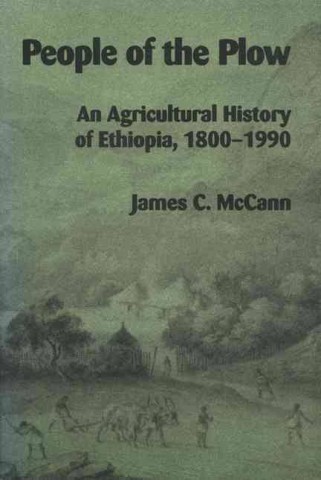
People of the Plow
James McCann’s People of the Plow (1995) presents the agricultural history of Ethiopia from 1800 to 1990. While historical, it is also in many ways anthropological, particularly in the parts wherein the author draws on years of fieldwork. What I found particularly interesting in the book is the broader discourse within which the book is […]
Tags: #Agriculture #Anthropology #Ethiopia #History #Politics

Essential Reference on Food Security
For those interested in, doing research on, or teaching about food security, Mark Gibson’s “The Feeding of Nations: Redefining Food Security for the 21st Century” (2012) is an essential reference to have. The book is a hardcover 640-page academic work, and unfortunately not cheap. There are a couple of ways to access the ideas if […]
Tags: #Agriculture #Food Security #Food Studies #Nutrition #Technology
About me

Logan Cochrane
Logan is a Professor at HBKU in the College of Public Policy. He is an Associate Fellow of the Ethiopian Academy of Sciences and an Adjunct Professor at Hawassa University (Institute for Policy and Development Research). Over the last twenty years, he has worked in Afghanistan, Benin, Burundi, Canada, the Democratic Republic of the Congo, Egypt, Ethiopia, Qatar, Saudi Arabia, South Africa, South Sudan, Tanzania and Uganda. Logan acts as a consultant for governmental agencies and non-governmental organizations, seeking to create bridges between research and practice.
Featured Posts
Tags
Africa Agriculture Anthropology Books Capitalism China Civil society Climate change Colonialism Colonization Conflict Culture decolonization Democracy Development Development Studies Economics Education Ethics Ethiopia Ethnography Fellowship Food Security Gender Globalization Governance History Human Rights Inequality Interdisciplinary International development Islam Leadership Middle East Migration Participation Philosophy Policy Politics Post-doc Poverty Power Qatar Racism Resilience Revolution Rural Development Sociology South Africa SustainabilitySubscribe to receive new blog posts via email