Thought Provokers

The Politics of Military and Humanitarian Interventions
In recent decades there has been a trend toward aligning or integrating military and humanitarian action. It has taken the form of militaries wanting to win hearts and minds, on one side, and humanitarian actors calling for military action on the other. “Contemporary States of Emergency: The Politics of Military and Humanitarian Interventions” (2010), edited […]
Tags: #Emergency States #Humanitarian Interventions #Military intervention #Military-Humanitarian #Politics

The Price of Inequality
Joseph Stiglitz is one of the most respected economists of our times and a person who has also held positions of significant influence, including chief economist of the World Bank and chairman of the Council of Economic Advisors for the US President (Clinton). In 2012 he authored “The Price of Inequality: How Today’s Divided Society […]
Tags: #America #Democracy #Inequality #Stiglitz #The Price of Inequality

From Dictatorship to Democracy
One of the world’s leading thinkers and activists for advancing democratic governance through non-violent action is Gene Sharp. He founded the Albert Einstein Institute and is a multiple-time nominee for the Nobel Peace Prize, as well as recipient of many other notable awards. He has authored many books, but one of his most influential and most widely […]
Tags: #Democracy #Dictatorship #Gene Sharp #Governance #Nonviolence

The Politics of Development in Morocco
‘Doing development differently’ can be interpreted as redistributing power in a decentralized way, and ensuring broad participation. How do we move these ideas from paper to practice? And, are these two objectives (not explicit in the DDD manifesto, but common in the discourse) compatible? Third, are these approaches to ‘doing development differently’ effective pathways to arrive […]
Tags: #Decentralization #Doing Development Differently #International development #Morocco #Politics

Colonial Attitudes in Contemporary Writing
It is not easy to convey the respect one has for the people with whom they work or with whom they conduct research. Similarly, it can be challenging to identify colonial and paternalistic attitudes. “I know it when I see it”, a judge famously stated in seeking to draw a line within fuzzy grey areas. […]

How Change Happens: Climate Change
Naomi Klien believes in the power of the people, and of collective action, to change the world. As outlined in “This Changes Everything: Capitalism vs The Climate” (2014), she writes: “Slavery wasn’t a crisis for British and American elites until abolitionism turned it into one. Racial discrimination want a crisis until the civil rights movement […]
Tags: #Building alliances #Change #Climate change #Community control #How change happens

Capitalism vs The Climate
Naomi Klien’s “This Changes Everything: Capitalism vs The Climate” (2014) is not a case for how climate change is real or important to consider, it is a call to action. From a research perspective, I was not overly impressed with the book. However, a few chapters into my reading I realized I had approached the […]
Tags: #Capitalism #Climate change #Democracy #How change happens #Naomi Klein
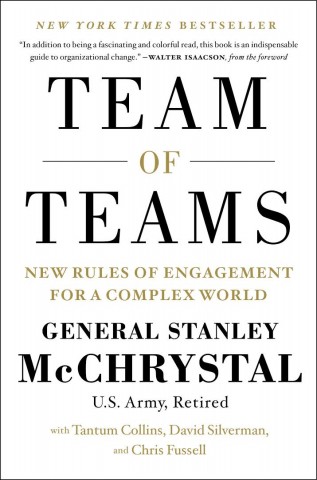
Engaging in a Complex World
In development studies and practice there are some key voices advocating for organizational changes. Ben Ramalingam, Duncan Green, Danny Burns and Stuart Worsley, Dave Algoso, and the USAID Learning Lab. They are calling for complexity and systems thinking to support more informed adaptive and iterative decision making and management. As these voices gain traction, and more […]
Tags: #Adaptive management #Complexity #Leadership #Shared consciousness #Team of Teams

Whose Reality Counts?
Twenty years ago Robert Chambers published “Whose Reality Counts? Putting the First Last” (1997). He challenges the academics and professionals to turn how they work upside down. His earlier book, Rural Development (1983) did similarly. In doing so, however, Chambers is not the angry dissident disowning ‘development’, rather he offers an optimistic vision: “That the […]
Tags: #Development Studies #International development #Professionalism #Robert Chambers #Whose Reality Counts

Reflections from Benedict Anderson
Benedict Anderson, author of the well-read “Imagined Communities” (1983), has authored a short autobiography / set of reflections called “A Life Beyond Boundaries” (2016). The book is an interesting read about his journey toward, and through, academia. The book was inspired by a request to share this experience with a Japanese audience, which was published in […]
Tags: #Benedict Anderson #Fieldwork #Language #Positionality #Research questions
About me

Logan Cochrane
Logan is a Professor at HBKU in the College of Public Policy. He is an Associate Fellow of the Ethiopian Academy of Sciences and an Adjunct Professor at Hawassa University (Institute for Policy and Development Research). Over the last twenty years, he has worked in Afghanistan, Benin, Burundi, Canada, the Democratic Republic of the Congo, Egypt, Ethiopia, Qatar, Saudi Arabia, South Africa, South Sudan, Tanzania and Uganda. Logan acts as a consultant for governmental agencies and non-governmental organizations, seeking to create bridges between research and practice.
Featured Posts
Tags
Africa Agriculture Anthropology Books Capitalism China Civil society Climate change Colonialism Colonization Conflict Culture decolonization Democracy Development Development Studies Economics Education Ethics Ethiopia Ethnography Fellowship Food Security Gender Globalization Governance History Human Rights Inequality Interdisciplinary International development Islam Leadership Middle East Migration Participation Philosophy Policy Politics Post-doc Poverty Power Qatar Racism Resilience Revolution Rural Development Sociology South Africa SustainabilitySubscribe to receive new blog posts via email