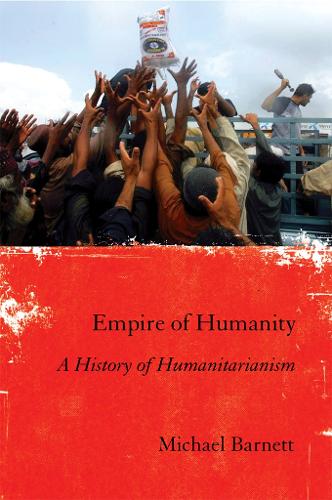
Michael Barnett’s “Empire of Humanity: A History of Humanitarianism” (2011, Cornell University Press) is a great addition to not only the history of the sector but also its complexities and ethical challenges. This is recommended reading for anyone seeking to understand humanitarianism. One limitation is that the book has a eurocentric focus, neglecting traditions from other regions beyond the Euro-West. Nonetheless, this is an important useful book and I hope we see similar books of the history of other regions, be that of this same era but different geographies (e.g., Japan) or different eras and geographies (e.g., organized humanitarian efforts in the Islamic world, institutionalized via state and non-state, waqf, institutions). A few notes:
“This is not a book on the history of all forms of humanitarianism around the world. It ignores the long tradition of Islamic charitable activities as well as forms of organized compassion in other cultures, traditions, and regions. This book does not pretend to be a complete history of charity, philanthropy, and compassion but instead is a history of the emergence and evolution of the international humanitarian order. That order is akin to the global economic and security orders: it is rooted in Western history and globalized in ways that were largely responsive to interests and ideas emanating from the West. I hope the growing interest in humanitarian action will spur others to write the history of other traditions.” (p. 15-16)
“It is impossible to study humanitarianism without being impressed by the importance of religion. Religious agencies can take credit for pouring the foundations for humanitarianism. Religious discourses continue to motivate, shape, and define various dimensions of humanitarianism. The importance of religion in this book is evident not only in its centrality to the narrative but also in the allegories, concepts, and metaphors that I use; it is extremely difficult to write about humanitarianism without falling under the sway of religious iconography. But humanitarianism has forced me to do more than locate the place of religion in world affairs. It also has led me to accept that humanitarianism is a matter of faith.” (p.17-18)
“There have been three distinct ages of humanitarianism: an imperial humanitarianism, from the early nineteenth century through World War II; a neo-humanitarianism, from World War II through the end of the Cold War; and a liberal humanitarianism , from the end of the Cold War to the present. Each age is distinguished by the constellation of the forces of destruction, production, which, in turn, shaped the overall purpose of humanitarianism and constrained how humanitarian organizations confronted the ethical dilemmas of the day.” (p. 29)
“Although it is fashionable to call humanitarianism the new alchemists, given their attempt to harness the science of the day to transform social, political, economic, and cultural relations so that individuals can lead more productive, healthy, and dignified lives. Those engaged in development, peacebuilding, and community empowerment strategies frequently use empirically grounded research, trial-and-error methods, and close observation to draw inferences that can guide future action; to the extent that they do, then they are on much firmer ground than the original alchemists ( and in this sense, the label is unkind and unfair). But when the conversation turns to how to produce peace, or how their individual programs might contribute to peacebuilding, I am less certain that they are any more justified in their confidence than the medieval alchemist in his Midas touch.” (p. 39-40)